When Do NSAIDS Are Prescribed?
Non-steroidal anti-inflammatory drugs (NSAIDs) are available in over-the-counter and prescription strength. NSAIDs belong to the drug class used as an analgesic (pain reliever), anti-inflammatory, and antipyretic (fever reducer). NSAIDs are proven to have fewer side effects compared to corticosteroids, which are also anti-inflammatory drugs. They should not be taken longer than recommended, as serious side effects can occur.
The kind and dosage of NSAID prescribed by medical practitioners depend on the ailment being treated. One daily dose or up to four daily doses may be given. They function by preventing the body from producing specific molecules that lead to inflammation. When treating severe inflammation and edema, like that which may result from rheumatic disorders, NSAIDs are usually administered at greater dosages. They are also frequently used to treat musculoskeletal disorders that cause moderate discomfort.
What Is The Role Of Opioids?
One of the things we are eager to get rid of is pain. No matter where the pain originates, it limits our activities, interferes with everything positive in life, and makes us feel sick. Doctors may occasionally need to prescribe stronger alternatives, such as narcotics or opioids, for severe pain that over-the-counter pain medicines cannot treat. Severe, chronic, and persistent pain can be effectively treated with opioids. Since opioids are prescription medications, you cannot buy them without a prescription form that a doctor has signed.
By binding to opioid receptors in the brain and other parts of the body, opioids prevent the brain from receiving pain signals from the body. Many individuals experience relief after taking the medication because it masks their pain. It is said in one of the reports that patients with severe and persistent pain can benefit from opioids if they take them as directed and in the recommended dosage. However, people who use opioids to treat chronic pain for an extended period of time run the danger of becoming addicted to them. For this reason, it’s preferable to take opioids under a doctor’s close supervision.
What Are Opioids And NSAIDS
The opium poppy plant naturally contains opioids, which need a prescription. Opioids are used to treat severe pain by preventing the body from sending pain signals to the brain. Opioids for pain relief help patients to feel relaxed, more comfortable and are suitable for serious occasions. NSAIDs can be administered by injection, tablet, capsule, or cream and can be purchased over-the-counter without a prescription, and are typically used to treat painful illnesses like arthritis. By inhibiting a particular enzyme called cyclooxygenase, they reduce inflammation in the body and alleviate pain.
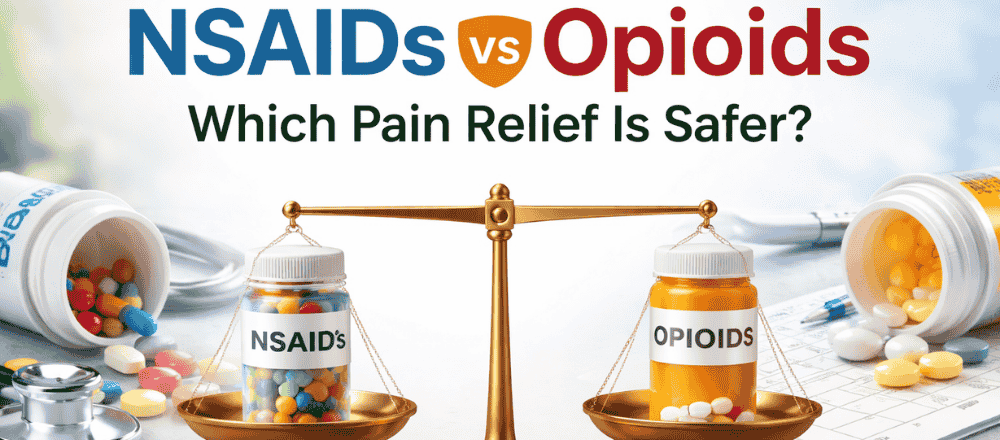
Which Is Safer, NSAIDS Or Opioids?
To establish the safest and most successful way to treat pain in adolescents and young adults recuperating from frequent outpatient procedures, a recent study evaluated two treatment regimens: one that employs a regimen of non-opioid medicine and another that includes a low-dose opioid. Researchers from one of the US colleges oversaw the study. Every day, thousands of teenagers and young people undergo outpatient surgery and are given painkillers to take home.
It’s obvious that medication is necessary, yet it’s not the ideal method to manage the pain. Opioids were once frequently used to manage post-operative pain. However, because of adverse effects and the potential for dependence, the opioid epidemic has made doctors and families hesitant to expose young kids to these drugs. Because of this, many medical professionals now prescribe nonsteroidal anti-inflammatory medicines (NSAIDS) along with acetaminophen instead of opioids.
Note: To effectively reduce pain without causing undesirable side effects, we must determine the proper pharmaceutical balance.